Tel: 0161 327 4605
Mob: 07376 576123
About > > Leadwork on roofs
An ancient art
Leadwork on roofs was first used by the Romans thousands of years ago.
Lead has many useful characteristics. It can be folded, moulded, stretched, nailed and screwed, into shapes and positions. It is competely inert, being weather resistant and largely unaffected by polution. It is also a heavy material and so if properly fabricated is storm resistant.
Lead fabrication
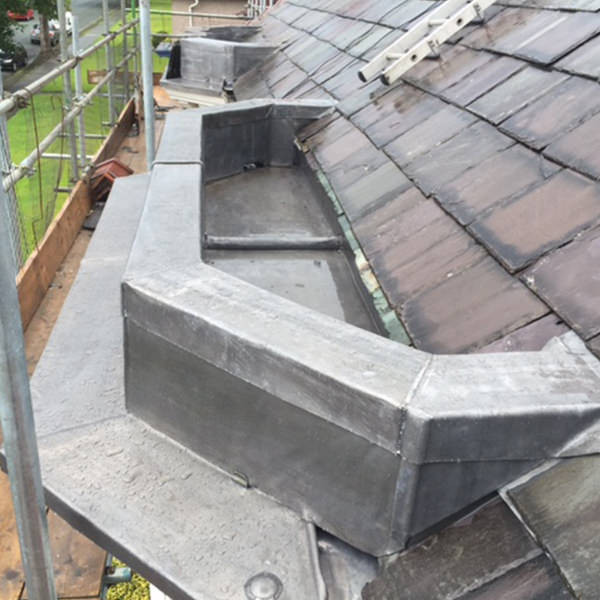
Lead on roofs is frequently used when no other option is available. Even copper sheet which is often used cannot be formed into such intricate shapes.
By building in folds, laps and using gravity to take its course it is possible to fabricate almost any shape either to hold or shed water. For the ultimate water-tightness lead joints can be soldered and sealed with molten lead.
Shown here decorative lead features over dormer windows which also act as roof coverings, gutters and rainwater spouts.

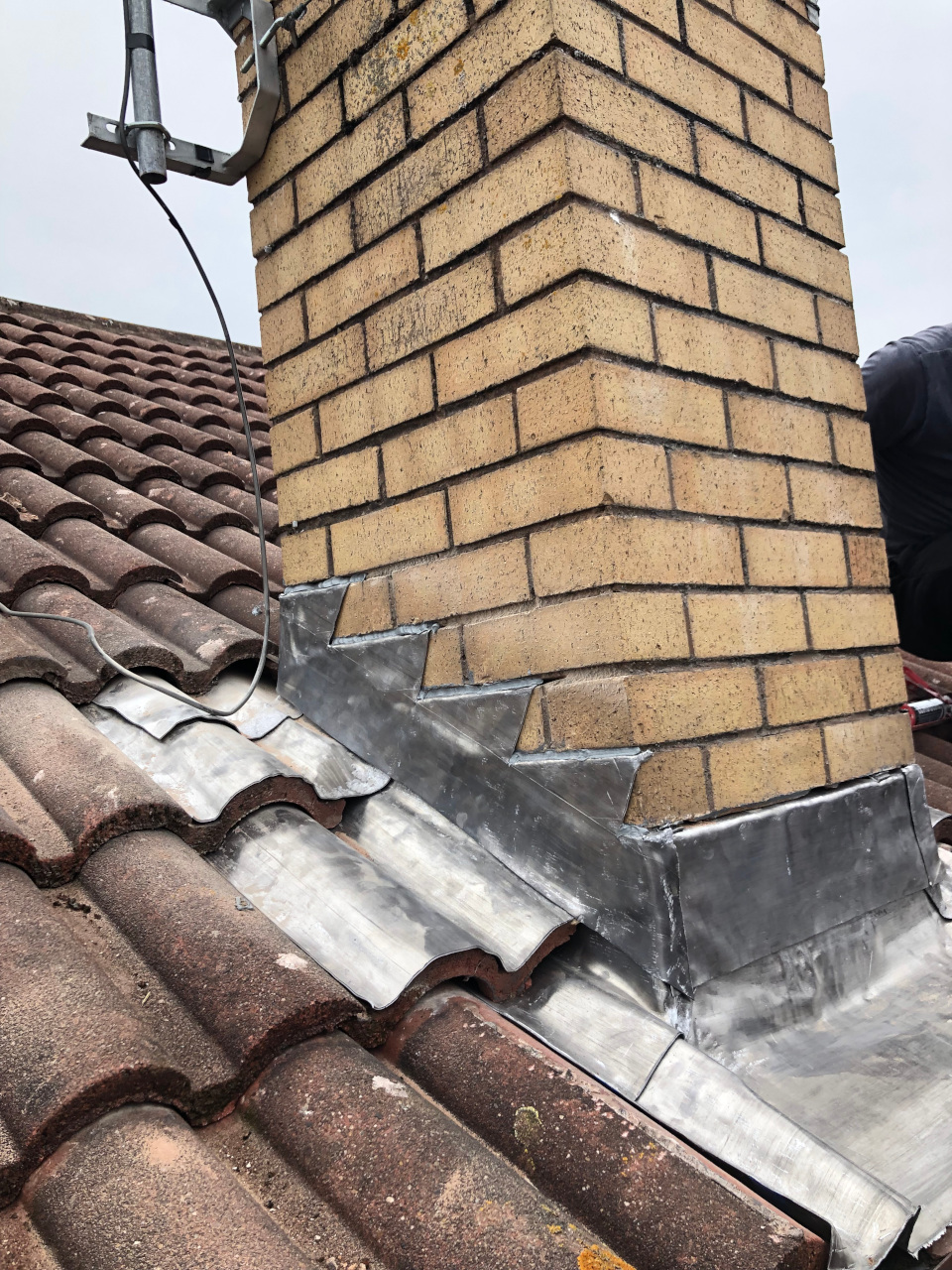
Lead flashings to chimney
At any junction or change of material on a roof lead is the preferred method of ensuring a watertight joint. Lead is inert so is unaffected by weather and it is maliable so can be dressed into almost any shape to accommodate the complexity of the joint. Leadwork on chimneys should be Code 4 quality. This is a standard that determins both thickness and overall quality of the material.
Where a large area of flat lead is required Code 5 is normally used.

